The Classroom Students Crave

The New Paradigm for K-12 Education

Creating the safe conditions for optimal learning

Phebe Hibshman

Rebuilding schools through the art of connection.

For twenty-five years I’ve worked with young people, building rooms where they felt safe enough to take real risks together. Schools need that now more than ever — and it can be taught. Now it’s a book, The Classroom Students Crave — and it’s built from the stories of everyone who was in the room.

The Classroom Students Crave: The New Paradigm for K-12 Education — Creating the safe conditions for optimal learning, by Phebe Hibshman — book cover

The Book

The Classroom Students Crave

The New Paradigm for K-12 Education

Creating the safe conditions for optimal learning

Teachers are burning out. Students feel unseen. And too often, “school safety” means hardware and lockdown drills instead of the thing that actually protects children: connection.

The Classroom Students Crave is a practical, hopeful guide to rebuilding school culture from the inside out — teacher wellbeing, student belonging, classroom craft, and a research-grounded approach to safety that begins with relationships. Written for the teachers, parents, and administrators who refuse to give up on the next generation.

Coming soon

Join the list

Inside the Book

Table of Contents

  1. IntroductionBefore We Lose Another One
  2. Chapter 1Why We Teach
  3. Chapter 2Who the Student Is
  4. Chapter 3What They Don’t Tell You at the Baby Shower
  5. Chapter 4How to Teach
  6. Chapter 5Leave Your Ego at the Door
  7. Chapter 6Set the Bar High
  8. Chapter 7The Quiet Revolution: Mindfulness and Meditation
  9. Chapter 8The Art of Debriefing
  10. Chapter 9The Importance of Play
  11. Chapter 10Games in the Classroom: A Teacher’s Bag of Tricks
  12. Chapter 11The Power of Affirmations
  13. Chapter 12Everyone Gets a Trophy
  14. Chapter 13The First Two Weeks
  15. Chapter 14The Importance of Service Work
  16. Chapter 15Does God Belong in the Classroom?
  17. Chapter 16The Myth of ADHD
  18. Chapter 17Protecting Developmental Innocence
  19. Chapter 18The Zombie Apocalypse Is Here
  20. Chapter 19Is Cursive Writing the Cure?
  21. Chapter 20What’s Broken and Why
  22. Chapter 21Before It Becomes a Shooting
  23. Chapter 22Always Keep the Student Safe
  24. Chapter 23Building Safe Schools
  25. Chapter 24A Letter to the People in Charge
  26. Chapter 25A New Blueprint
  27. ConclusionStart Somewhere. Start Today.

From the Book

Introduction — Before We Lose Another One

Read the IntroductionHide the Introduction

Something is wrong with our schools. You already know this. You knew it before you picked up this book. You have felt it as a parent watching your child leave the house in the morning with the weight of the world on their shoulders. You have felt it as a teacher standing at the front of a room full of exhausted, anxious young people and wondering how it came to this. You have felt it as an administrator caught between a system that demands compliance and children who are quietly — and sometimes not so quietly — breaking under the pressure of it.

You have felt it every time a school shooting makes the news and the conversation that follows changes nothing.

This book is for all three of you. The teacher. The parent. The administrator. Because what is happening in our schools is not any one person’s fault, and it will not be fixed by any one person’s effort. It will take all of us — everyone who touches the life of a child — deciding together that we have had enough of what we have built and that we are willing to imagine something better.

The Dire Numbers

The recent data on our youth is horrific with seemingly no end in sight. Every other year the Centers for Disease Control asks American high school students whether, in the past year, they felt so sad or hopeless almost every day for two weeks or more that they stopped doing their usual activities. In 2013, 30 percent said yes. By 2021 it was 42 percent. In 2023 it was 40 percent.

Open that number and it gets harder. Among girls, 53 percent said yes. Among LGBTQ+ students, 65 percent. More than half the young women in any given hallway. Nearly two out of three LGBTQ+ students in the building are sad and hopeless.

Between 2007 and 2021, the suicide rate among young people aged 10 to 24 rose 62 percent. Among girls aged 10 to 14, the rate more than tripled between 2000 and 2020.

Thankfully, those rates have fallen somewhat since 2021, but the decline has been driven almost entirely by boys. Among girls, the rate has not moved.

Among girls the rate of depression and suicide has not moved and is astronomically high.

And in June of 2026, researchers in Melbourne published the finding that reorganized my thinking about all of it. They had followed almost 1,200 children from age nine to age nineteen, surveying them every year for a decade. Children who used social media at least two hours a day were at greater risk of depressive symptoms and poor wellbeing at their assessment the following year. The strongest effect of all appeared in girls aged twelve and thirteen.

Twelve and thirteen. Sixth and seventh grade.

That is not one risk window among many. That is the window — the two or three years in which a young person is assembling the story of who they are, and is therefore most vulnerable to being manipulated, positively or negatively. We have given our children cell phones and allowed their use on social media at earlier ages, all designed to hold their attention and label themselves against every other person they know or follow.

A Solution

Other countries are adopting the under 16+ age ban on social media, nationally, for all students because of this crisis and we should follow suit.

Australia did it in December of 2025. More than twenty countries have followed or are preparing to. Not one of them waited for the scientific debate to resolve, because they understood that the burden of proof belongs to the platform rather than to the seventh grader. And those platforms must pay hefty fees if underage children are discovered.

I do not offer that recommendation lightly, and I’m sure it will be an agony to change for those youth already immersed in social media, but I write about this exact subject later in the book with the latest findings. This is something we could actually adopt to stop this crisis.

The Other Half of the Crisis

There is a second emergency in our schools, and we have been strangely willing to discuss it as though it were unrelated to the first.

The adults are leaving.

In 2026, the Learning Policy Institute counted roughly 425,000 American teaching positions that were either sitting empty or filled by someone not fully certified to teach the subject — about one in eight teaching jobs in this country. It was the third consecutive year that number rose. Interest in teaching among college students has fallen to its lowest level in fifty years. Roughly 44 percent of teachers leave the profession within their first five years.

And when Gallup surveyed more than twelve thousand American workers across every industry in this country, K-12 education came in first for burnout. Not first among the helping professions. First. Forty-four percent of K-12 workers said they feel burned out at work always or very often — ahead of healthcare, ahead of law, ahead of government, ahead of retail, ahead of every other industry measured. Among teachers specifically it was 52 percent. Among female teachers, 55 percent.

In RAND’s most recent survey, 53 percent of teachers reported burnout, and the figure runs consistently higher among women.

Attrition — teachers leaving the profession altogether, accounts for roughly 90 percent of annual demand for new teachers, and nearly three out of four of the people who leave do so voluntarily, for reasons that have nothing to do with retirement.

They are not aging out. They are not being laid off. They are choosing to go — which means the conditions are unsustainable, but those conditions can be changed.

I do not believe these two crises are separate. I believe they are the same crisis viewed from opposite sides of the desk. A student who does not feel seen and a teacher who does not feel human are produced by the identical machine — a system that runs on compliance, measurement, and control, and that has quietly stopped believing a classroom is a relationship.

So this book proposes to treat them together. The practices in these pages are designed to do two things at once: to give a student a room worth returning to, and to give a teacher back the reason she entered this profession in the first place and let the job be manageable, not impossible. The blueprint at the end is not only a vision for what school could look like for optimal learning. It is an argument that the same changes are our most realistic path out of the teacher shortage — because the cheapest way to fill four hundred thousand empty teacher positions is to stop burning them out.

How We Got Here

I came to teaching through an unusual door. I was a youth minister before I was a theatre teacher and director, and that sequence shaped everything about how I understood young people and what they needed. In youth ministry, the work was relational before it was instructional. You did not stand at the front of a room and deliver content to passive recipients. You sat in a circle. You asked real questions. You played games that revealed who people actually were. You created the conditions for genuine community and then you watched what grew inside it.

When I moved into the classroom, I brought all of that with me. And what I discovered — confirmed again and again over years of teaching students from sixth grade through twelfth — was that the things that made young people thrive in a youth group were the same things that made them thrive in a classroom. Safety. Play. Real relationships with trusted adults. The freedom to be imperfect while they figured out who they were. The experience of being genuinely seen.

What I also discovered was how rarely our schools provided any of that. And how high the cost of that absence had become.

What Works

I am a teacher who loved her students, made mistakes, learned from them, and spent years paying close attention to what actually worked and what did not.

This is not a partisan book. The crisis in our schools does not belong to one political party or one ideological camp. Children are suffering across every zip code, every school district, every demographic. The solutions I propose will not fit neatly into anyone’s existing talking points — because children do not fit neatly into talking points, and anyone who tells you otherwise is not really talking about children.

This is not a book that is easy on the current system. I will say things in these pages that will make some administrators uncomfortable, that will challenge some teachers, that will ask some parents to look honestly at their own role in the pressure their children are under. I say all of it with love — for the profession, for the families, and above all for the young people who are living the consequences of our collective choices right now, today, in real time.

What This Book Is

This is a book about joy. About what happens in a classroom when a teacher decides that the five minutes at the beginning of class belong to the students — to play, to reset, to be genuinely human together before the lesson begins.

This is a book about systems — about homework that was invented as a punishment and became policy, about the standardized tests that measure compliance and call it intelligence, about the school buildings that look and feel like prisons because in every meaningful sense they function like prisons.

This is a book about safety. Real safety — not metal detectors and active shooter drills, but the kind of safety that comes from a young person walking into a building and knowing, in their bones, that they are wanted there.

This is a book about the screens, and about what we are willing to do about them. Not just the numbers — a plan, with a specific age attached to it and a specific set of things to put back into a child’s hands in place of the cell phone.

And this is a book about the creativity we are destroying. In a study commissioned by NASA, researchers tested 1,600 children between the ages of three and five and found that 98% of them scored at genius level in creative thinking. By age ten that number had fallen to 30%. By adulthood, less than 2% remained. Twelve years of schooling, and we reduce our children’s creative genius by 96%. We are doing this. We can stop doing this.

A Word About My Classroom

The theatre department really was an island of misfits, as a colleague once observed. She meant it as a gentle joke. I took it as the highest compliment of my career.

Those students taught me everything I know about what young people need. They came into my classroom carrying things I could not always see and sometimes could not fix. But they came back. Voluntarily. Day after day, they came back — because the room was safe and the games were real and they knew, without my having to say it, that I was genuinely glad they were there.

That is the classroom this book is trying to build. Not just in theatre departments, but everywhere. In every subject, every grade level, every school in this country.

Every child deserves a room they want to come back to.

And every teacher deserves one too.

How to Read This Book

The book moves in four directions. We begin with the foundation — the why and the who of teaching, the deeper purpose that gets buried under the daily pressure of the machine. We move into practice — how to actually teach, how to debrief, why play matters, and a full collection of games tested in real classrooms with real students. We turn then to diagnosis — what is broken in our system and why, from ADHD mismanagement to the violation of developmental innocence to the phones in our students’ pockets to the school shooting crisis that is a symptom of everything else. And we close with transformation — a concrete, hopeful, actionable vision for what school could actually look like if we were willing to build it around children rather than around control.

However you read it — read it as someone who still believes things can be different. Because they can.

But it requires us to remember what we are actually here for.

We are here for the children. Let us act like it.
Every figure above is fully cited in the book’s endnotes. Sources include the CDC Youth Risk Behavior Survey, the Medical Journal of Australia, Gallup, RAND, and the Learning Policy Institute.

A Call to Everyone Who Was in the Room

Were you part of this story?

Dear youth who are no longer youth, parents of those youth, fellow teachers, youth leaders, and former colleagues — I’ve written a book called The Classroom Students Crave, and so much of it is built from the experiences I had with all of you.

I’d love to include your story, and — if you’re willing — your picture too. If you’re able, I’d be so grateful if you’d share something significant from our time together, or just something fun you remember. Every memory matters to me.

Please send it along when you’re able. As always — many thanks, and so much love for you.

— Phebe

If the upload gives you any trouble, you’re welcome to email your photo to me directly at phebe@theclassroomstudentscrave.com instead.

For the Vets

Did you teach for years and have some wisdom to impart?

This book is built on the voices of people who did the work. If you spent real time in the classroom, your experience belongs in it — what held your students, what wore you down, and what made it all worth it.

Answer as many of the questions as you like, and skip any that don’t fit. Your words may help shape how we rebuild school culture for the next generation of teachers and students.

Thank you for your years in the room.— Phebe

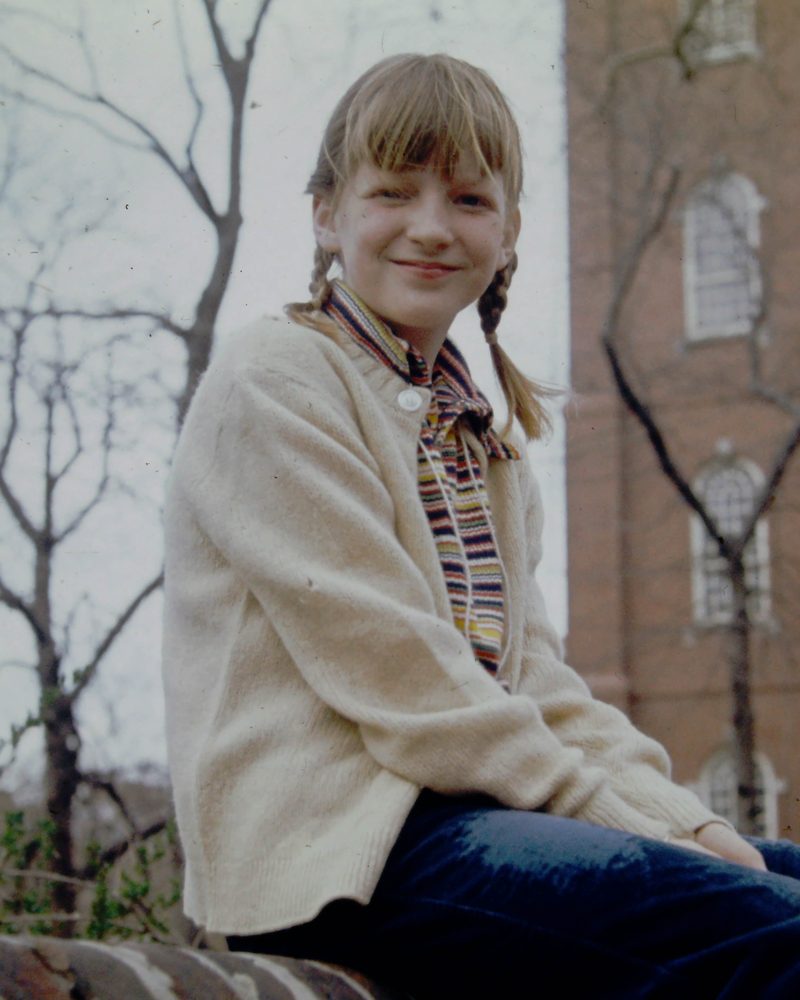
Phebe Hibshman as a girl, aged twelve
Phebe, aged 12

About the Author

Phebe Hibshman

I’m a playwright, theatre director, and educator. I trained classically at the London Academy of Music and Dramatic Art, performed professionally, and worked with the Shakespeare Theatre at the Folger before spending more than two decades directing and teaching in independent, public-arts, and faith-based schools.

Across all of it, one thing held true: a director’s real job is to build a room where nervous people feel safe enough to take risks together. That is exactly the work our schools are trying to do now — for students who feel unseen and teachers who are running on empty. The Classroom Students Crave is what I’ve learned about doing it on purpose.

Directing and teaching credits include St. Thomas Episcopal School, New World School of the Arts, and The Hebrew Academy, alongside years of youth and community work.

Contact

Let’s talk.

To share a memory, ask about the book, or just say hello — I’d love to hear from you.

Email Phebe

Speaking

Looking to invite Phebe to speak?

Phebe’s keynotes and workshops for schools, districts, and conferences have their own home.